Northern Bald Ibis in Morocco: Where to See One of the World’s Rarest Birds
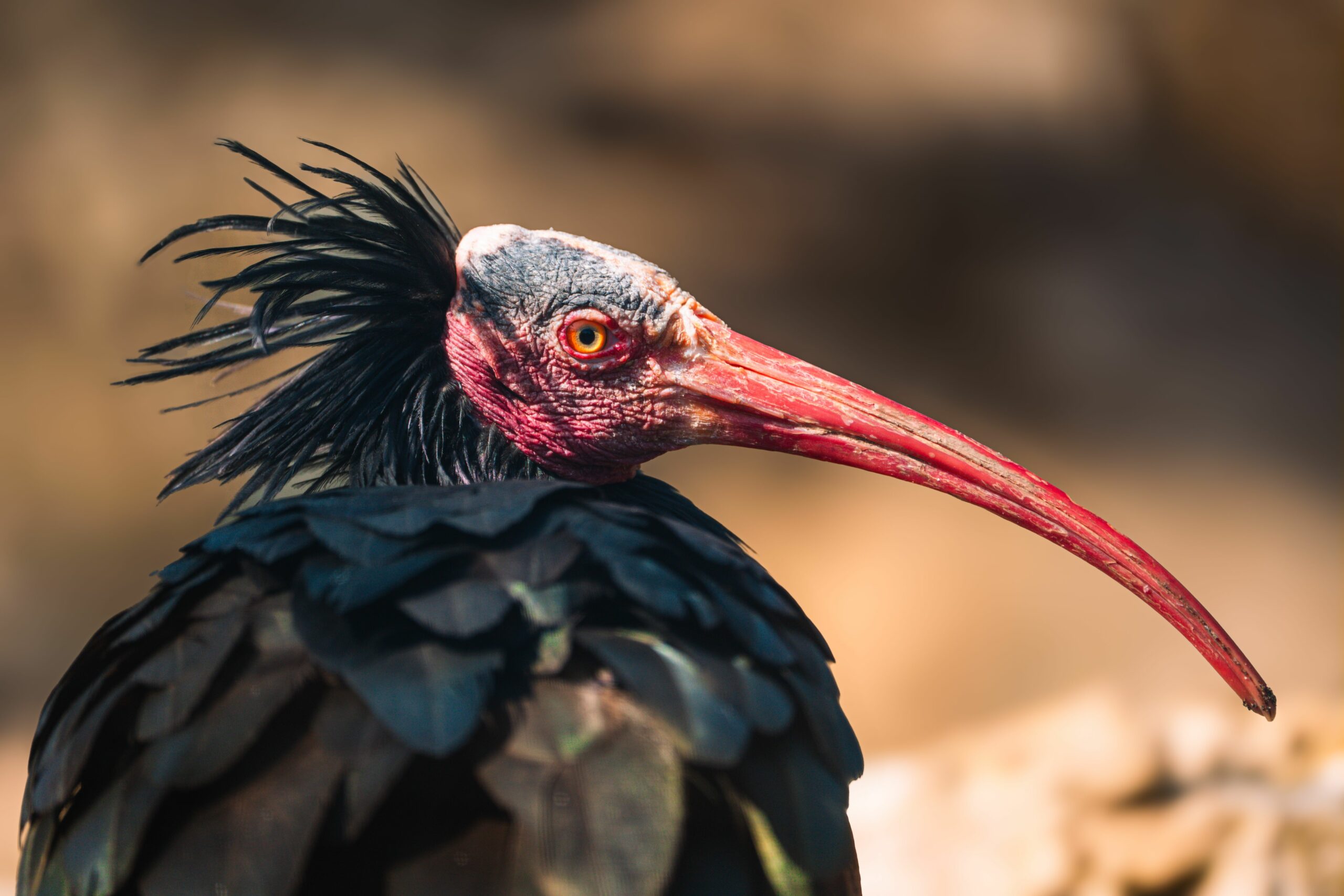
The Northern Bald Ibis is one of the rarest birds on Earth and one of Morocco’s greatest wildlife conservation success stories. With its distinctive bald red head, long curved bill, and glossy black plumage that shimmers with green and purple tones, this remarkable species looks unlike almost any other bird in the Western Palearctic.
For birdwatchers, wildlife photographers, and nature-focused travelers, Morocco offers the best opportunity in the world to see the Northern Bald Ibis in its natural habitat. While the species once disappeared from much of Europe, the Middle East, and North Africa, Morocco now holds the largest remaining wild population.
If spotting a truly iconic species is on your birding wish list, this guide explains where to see the Northern Bald Ibis in Morocco, the best seasons to visit, what behavior to look for, and how to maximize your chances of a memorable encounter.
Why the Northern Bald Ibis Is So Special
The Northern Bald Ibis (Geronticus eremita) is classified as Endangered and has experienced dramatic population declines over centuries. Historically, it ranged across parts of Europe, North Africa, and the Middle East, but habitat loss, hunting, and environmental changes pushed the species close to extinction.
Today, Morocco is the stronghold for the wild population.
What makes the species particularly fascinating is its appearance and behavior:
- Bare red head and face
- Long downward-curved bill
- Metallic black plumage
- Distinctive shaggy neck feathers
- Colonial nesting habits on sea cliffs
- Highly social behavior
Unlike many secretive bird species, Northern Bald Ibises often forage in open landscapes, allowing excellent viewing opportunities when located.
For many visiting birders, seeing this species ranks alongside finding Moussier’s Redstart, Levaillant’s Woodpecker, or Desert Sparrow as one of Morocco’s most rewarding wildlife experiences.
Morocco: The Global Stronghold of the Northern Bald Ibis
Morocco plays a critical role in the survival of the species. Conservation programs, habitat protection, and monitoring efforts have helped stabilize and gradually increase the wild population.
Most Northern Bald Ibises in Morocco are concentrated along the Atlantic coast, particularly within protected areas where suitable nesting cliffs and feeding grounds remain intact.
The species has become one of the flagship birds of Moroccan conservation and is frequently highlighted during specialized birdwatching tours throughout the country.
Visitors joining bird-focused itineraries through Wild Bird Watching Morocco can often combine Northern Bald Ibis observations with many other sought-after species found across the Atlas Mountains, Atlantic wetlands, and Saharan habitats.
Where to See Northern Bald Ibis in Morocco
1. Souss-Massa National Park
Without question, Souss-Massa National Park is the most famous and reliable location for seeing the Northern Bald Ibis.
Located south of Agadir, the park protects a diverse landscape of:
- Coastal cliffs
- Sand dunes
- Estuaries
- Wetlands
- Semi-arid steppe habitats
These habitats provide ideal nesting and feeding conditions for the species.
Northern Bald Ibises typically nest on inaccessible coastal cliffs and spend much of the day feeding in nearby grasslands and open terrain. Early morning and late afternoon often provide the best opportunities for observation.
Birders visiting the park frequently encounter:
- Northern Bald Ibis
- Audouin’s Gull
- Eurasian Spoonbill
- Greater Flamingo
- Osprey
- Marsh Harrier
- Various waders and migratory birds
The area is considered one of Morocco’s premier birdwatching destinations and is a key highlight of many birding itineraries.
2. Tamri
North of Agadir lies Tamri, another important site associated with Northern Bald Ibis conservation.
Tamri is well known among experienced birders because it supports one of the species’ most significant breeding colonies.
The combination of:
- Coastal cliffs
- Agricultural fields
- Open grazing areas
creates ideal conditions for feeding and nesting.
Many Northern Bald Ibises can be observed moving between feeding grounds and breeding sites throughout the day.
Because the birds often forage in relatively open terrain, photography opportunities can be excellent when conditions are favorable.
3. Atlantic Coastal Habitats Near Agadir
Several coastal areas surrounding Agadir provide opportunities to observe the species, especially when explored with local guides who understand current feeding patterns and seasonal movements.
The Atlantic coast offers spectacular scenery in addition to birdwatching opportunities, making it attractive for travelers who wish to combine wildlife viewing with broader nature experiences.
Best Time to See Northern Bald Ibis in Morocco
One advantage of birding for Northern Bald Ibis is that the species is present year-round in Morocco.
However, some periods offer better conditions than others.
| Season | Birding Conditions |
| Spring (March–May) | Excellent activity levels and breeding behavior |
| Summer (June–August) | Good visibility but warmer temperatures |
| Autumn (September–November) | Pleasant weather and strong bird diversity |
| Winter (December–February) | Excellent birdwatching with fewer tourists |
Spring
Spring is often considered the most rewarding season.
Bird activity increases, breeding behavior becomes more noticeable, and many migratory species pass through Morocco at the same time.
Autumn
Autumn combines comfortable weather with excellent overall bird diversity.
This season is particularly attractive for visitors interested in seeing both resident and migratory species during a single trip.
Winter
Winter offers excellent viewing opportunities, particularly in Atlantic coastal habitats where many waterbirds gather.
What Does a Northern Bald Ibis Look Like?
The species is surprisingly distinctive once seen.
Key identification features include:
Head and Face
- Bare red skin
- Long, narrow curved bill
- Expressive appearance
Plumage
At first glance, the bird appears black.
In good light, however, the feathers reveal:
- Green sheen
- Purple highlights
- Bronze reflections
Flight
In flight, Northern Bald Ibises display:
- Broad wings
- Strong wingbeats
- Elegant gliding behavior
Their silhouette differs significantly from herons, storks, and other large birds that travelers may encounter in Morocco.
Discover Morocco Through Birdwatching
Discover Morocco’s best birdwatching destinations with expert-guided tours designed for bird lovers, photographers, and wildlife enthusiasts.
Conservation Success Story
The Northern Bald Ibis remains endangered, but Morocco has demonstrated how effective conservation can make a real difference.
Key conservation measures include:
- Habitat protection
- Monitoring breeding colonies
- Limiting disturbance near nesting sites
- Community engagement
- Scientific research programs
As a result, Morocco has become the most important refuge for the species globally.
For birdwatchers, seeing a Northern Bald Ibis is more than simply adding another species to a life list—it is witnessing a rare conservation success in action.
Practical Travel Tips
Base Yourself Near Agadir
Agadir provides easy access to both Souss-Massa National Park and Tamri.
Hire a Knowledgeable Guide
Local birding guides understand current bird locations and significantly improve viewing opportunities.
Start Early
Bird activity is generally highest shortly after sunrise.
Bring Binoculars
Even when birds are visible, quality optics greatly enhance the experience.
Allow Extra Time
Spending two or three days in the region increases your chances of observing a variety of behaviors and obtaining better photographic opportunities.

Behavior to Watch For
Observing behavior can be just as rewarding as identifying the bird itself.
Group Feeding
Northern Bald Ibises typically forage together.
They use their long bills to probe soil for:
- Insects
- Beetles
- Larvae
- Small reptiles
- Other invertebrates
Social Interactions
The species is highly social.
Visitors often witness:
- Vocal communication
- Group movements
- Courtship displays
- Territorial interactions
Cliff Nesting
Breeding colonies are usually located on coastal cliffs where nests remain protected from predators and disturbance.
Watching birds commute between feeding areas and nesting sites can be particularly impressive.
Bird Photography Tips
The Northern Bald Ibis is among Morocco’s most photogenic bird species.
To improve your photography results:
Use Early Morning Light
The metallic sheen of the feathers becomes most visible shortly after sunrise.
Focus on Behavior
Rather than capturing only static portraits, try photographing:
- Feeding behavior
- Social interactions
- Flight shots
- Courtship displays
Bring a Telephoto Lens
A lens in the 400–600 mm range offers excellent flexibility while maintaining a respectful distance.
Be Patient
Bird movements can be unpredictable.
Remaining in a promising location often produces better results than constantly changing sites.
Combining Northern Bald Ibis with a Morocco Birding Tour
Many visitors travel to Morocco specifically for Northern Bald Ibis, but the country offers far more than a single target species.
A well-planned itinerary can include:
- Atlas Wheatear
- Moussier’s Redstart
- Levaillant’s Woodpecker
- Desert Sparrow
- Cream-coloured Courser
- Pharaoh Eagle-Owl
- Audouin’s Gull
- Double-spurred Francolin
Travelers interested in a comprehensive birding experience can explore Morocco’s diverse habitats through the 10 Days Morocco Atlas, Sahara & Souss Birding Tour from Marrakech and the 9 Days Morocco Birding Tour — Anti-Atlas, Sahara Edge & Souss Region , both of which focus on Morocco’s richest birding regions.
FAQ's
Is Morocco the best place in the world to see the Northern Bald Ibis?
Yes. Morocco supports the largest remaining wild population and offers the most reliable opportunities for observing the species.
Can beginners see Northern Bald Ibis easily?
Yes. The species can often be observed in open habitats, making it accessible even for first-time birdwatchers.
Is Souss-Massa National Park the best location?
Souss-Massa is generally considered the most reliable site, although Tamri is also extremely important and productive.
When is the best month to visit?
March, April, October, and November are particularly popular because of pleasant weather and excellent birding conditions.
Can I photograph Northern Bald Ibis?
Yes. Morocco is one of the best places in the world for photographing this species, especially around feeding areas and coastal habitats.
The Northern Bald Ibis is one of the most extraordinary birds a traveler can encounter in Morocco. With its prehistoric appearance, remarkable conservation story, and limited global distribution, it represents a true bucket-list species for birdwatchers and wildlife photographers alike.
Thanks to the protected habitats of Souss-Massa National Park, Tamri, and Morocco’s Atlantic coast, visitors have an excellent chance of observing this endangered bird in the wild. Combined with Morocco’s exceptional diversity of habitats and species, a search for the Northern Bald Ibis quickly becomes part of a much larger birding adventure.
For anyone passionate about wildlife, few experiences compare to watching a flock of Northern Bald Ibises glide above the Atlantic cliffs of Morocco—a reminder of both nature’s fragility and its resilience.