
How Many Bird Species Can You See in Morocco? A Realistic Guide by Trip Length
Morocco is one of the most interesting birdwatching destinations in North Africa, but one question comes up again and again when travelers begin planning a trip: how many bird species can you actually see in Morocco?
The answer is more complicated than simply looking at a national bird checklist. Morocco has recorded a very large number of species over time, including migrants, rare visitors, accidental species, introduced birds, and species that are not realistically encountered during an ordinary birdwatching holiday. For example, Avibase currently lists 518 species for Morocco under its current taxonomic treatment, while another taxonomic checklist on the same platform lists 370. These differences show why a national checklist should not be confused with the number of birds a traveler can expect to see on a trip.
For a traveler, the more useful question is: how many species can I realistically expect to see in 3, 5, 7, 10, or 14 days?
That depends on the season, route, habitats, weather, amount of time spent in the field, and your experience identifying birds. A birder visiting Morocco for migration and covering wetlands, forests, mountains, desert, and coastal habitats can build a much larger list than someone spending five days in a single region.
This guide gives you a realistic way to think about bird species in Morocco, without promising unrealistic numbers or treating a birding trip like a race to fill a checklist.
How Many Bird Species Are There in Morocco?
Morocco has an impressive national bird list because of its geographical position.
The country sits at the meeting point of Europe and Africa, with the Atlantic Ocean to the west and the Mediterranean to the north. The Strait of Gibraltar also creates an important migration route between Europe and Africa.
This means Morocco receives a mixture of:
- Resident North African species
- European breeding species
- African species
- Migratory birds
- Wintering waterbirds
- Passage migrants
- Rare and accidental visitors
The result is a remarkably diverse bird fauna. However, the headline number needs context. A national checklist includes birds that may have been recorded only once or a handful of times. It can also include species that are extremely difficult to find or that occur only under unusual circumstances.
A traveler should therefore focus on realistic trip potential, rather than asking how many species exist on paper.

What Determines Your Bird Species Count?
Your final list is influenced by several factors.
Trip Length
More days generally give you more opportunities to encounter different birds, but the relationship is not linear. The first few days can add many new species because you are moving through new habitats.
After several days, you may start encountering the same common birds repeatedly. An extra week is most valuable when it allows you to visit a completely different ecosystem.
Habitat Diversity
This may be even more important than the number of days. Imagine spending seven days around one type of habitat. You may become very good at finding the birds that live there, but your overall species list will remain relatively specialized.
Now imagine spending seven days covering:
- Mountain habitats
- Cedar forests
- Wetlands
- Desert plains
- Oases
- Atlantic coast
Suddenly, you are searching within several completely different bird communities.
This is one of the biggest reasons Morocco is so productive for birdwatching.
Season
The species present in Morocco change throughout the year.
Spring and autumn are especially important because of migration. Winter can be excellent for waterbirds and other winter visitors, while summer can be productive for desert specialists.
A five-day trip during peak migration can therefore produce a very different list from a five-day trip during another season.
Experience
An experienced birder will almost always identify more species than someone on their first birdwatching trip.
This is not because experienced birders necessarily see more birds.
They recognize subtle differences.
They may identify a bird from:
- Its call
- Flight pattern
- Silhouette
- Habitat
- Feeding behavior
- Plumage details
- Movement
- Size compared with nearby species
A beginner may see the same bird but not be confident enough to add it to a life list.
How Many Species Can You See in 3 Days?
A three-day birdwatching trip can be productive, but it should be considered a focused experience rather than a complete survey of Morocco’s birdlife.
A realistic expectation might be somewhere around 40–80 species on a well-planned trip, although the number can be lower or considerably higher depending on the season and locations visited.
The best strategy for a short trip is to avoid spending most of your time driving between distant habitats.
Instead, choose one region and explore it properly.
For example, a short trip around the Sahara could focus on desert-adapted species and the habitats surrounding oases, rocky plains, wadis, and water sources.
A coastal trip could concentrate on lagoons, mudflats, estuaries, beaches, and surrounding agricultural land.
The goal is not to collect the highest possible number of names.
It is to make the limited time count.
What Can Make a Three-Day Trip Productive?
Start before sunrise whenever possible.
Bird activity is often highest during the cooler hours of the morning, especially in southern Morocco during warm periods.
Also, do not ignore common species.
Learning to identify common birds quickly means you can spend more time looking for unusual ones instead of repeatedly stopping to identify familiar species.
Discover Morocco Through Birdwatching
Discover Morocco’s best birdwatching destinations with expert-guided tours designed for bird lovers, photographers, and wildlife enthusiasts.
How Many Species Can You See in 5 Days?
Five days is a much more useful length for a dedicated Morocco birdwatching trip.
For an experienced birder following a productive route through several habitats, around 80–130 species can be a reasonable broad expectation, although actual results vary significantly.
A five-day itinerary can work particularly well when it combines mountain and desert environments.
For example, the High Atlas can introduce species associated with rocky slopes and high elevations, while southern Morocco adds larks, wheatears, desert birds, raptors, and species associated with valleys and wetlands.
The difference between a good five-day itinerary and an inefficient one can be substantial.
If half the trip is spent traveling long distances without stopping at productive habitats, your species count may be much lower.
If the route is built around dawn birding, strategic stops, and several distinct habitats, the same five days can be remarkably productive.
How Many Species Can You See in 7 Days?
Seven days gives you enough time to build a genuinely diverse Morocco bird list.
For experienced birders, roughly 120–160 species can be realistic on a well-planned seven-day itinerary, particularly when the route covers multiple habitats and the timing is favorable.
This is also the point where Morocco’s geographical diversity really begins to work in your favor.
You can move from the High Atlas into the southern valleys and desert landscapes, while still allowing time to explore specific locations rather than simply passing through them.
A week can also provide more flexibility.
If weather conditions are poor on one morning, you have more opportunities to compensate later.
If a particular site is unusually productive, your guide can spend additional time there.
And if one target species refuses to appear, there is still time to try again.
How Many Species Can You See in 10 Days?
Ten days is an excellent length for travelers who want a serious introduction to Morocco’s birdlife without committing to a full two-week expedition.
With a route covering several major ecosystems, around 160–220 species can be a reasonable target for experienced birders, while particularly favorable conditions can produce higher totals. At this point, habitat planning becomes extremely important.
A comprehensive itinerary can combine the High Atlas, Middle Atlas, southern valleys, Sahara, Anti-Atlas, and Atlantic or Souss habitats.
Each region adds species that may not occur elsewhere on your route.
The High and Middle Atlas
Mountain habitats can produce species such as:
- Moussier’s Redstart
- Atlas Wheatear
- Crimson-winged Finch
- Blue Rock Thrush
- Alpine Accentor
- Rock Sparrow
- Levaillant’s Woodpecker in suitable woodland
The cedar forests around Azrou and Ifrane are particularly interesting for woodland birding, while higher elevations offer a very different collection of species. The geographic diversity of the Atlas is one of the major reasons longer birding routes can produce substantially larger lists.
Southern Valleys
The Dades, Todgha, and Ziz valley systems provide cliffs, rocky slopes, river corridors, and cultivated areas.
These habitats can be productive for:
- Raptors
- Rock-loving species
- Wheatears
- Thrushes
- Warblers
- Species associated with water and vegetation
Sahara and Desert Steppe
The desert introduces a completely different group of birds.
Depending on the location and season, birders may search for:
- Desert Sparrow
- Cream-coloured Courser
- Desert Warbler
- Sandgrouse
- Desert larks
- Brown-necked Raven
- Pharaoh Eagle-Owl
Desert birding requires patience because birds may be concentrated around particular resources rather than evenly distributed across the landscape.
Atlantic Coast and Wetlands
Coastal habitats can add a large number of waterbirds to a trip list.
Lagoons, estuaries, mudflats, marshes, and coastal wetlands can hold:
- Flamingos
- Spoonbills
- Gulls
- Terns
- Waders
- Ducks
- Herons
- Egrets
The Atlantic coast is particularly important during migration and winter, when many birds use wetlands as feeding and resting areas.
How Many Species Can You See in 14 Days?
If birdwatching is the main purpose of your trip, two weeks gives you the best opportunity to build a very substantial species list.
For an experienced birder following a comprehensive multi-habitat itinerary, around 200–280 species is a realistic high-level target under favorable conditions.
Some trips can produce more, but it is important not to treat 280 species as a guarantee.
The site’s own published guidance gives approximately 200–280 species for experienced birders on comprehensive 10–14 day tours covering habitats such as the Sahara, Atlas Mountains, wetlands, and coastal areas.
A particularly productive fourteen-day route can include:
- High Atlas
- Middle Atlas
- Cedar forests
- Southern valleys
- Desert steppe
- Sahara
- Anti-Atlas
- Atlantic wetlands
- Souss region
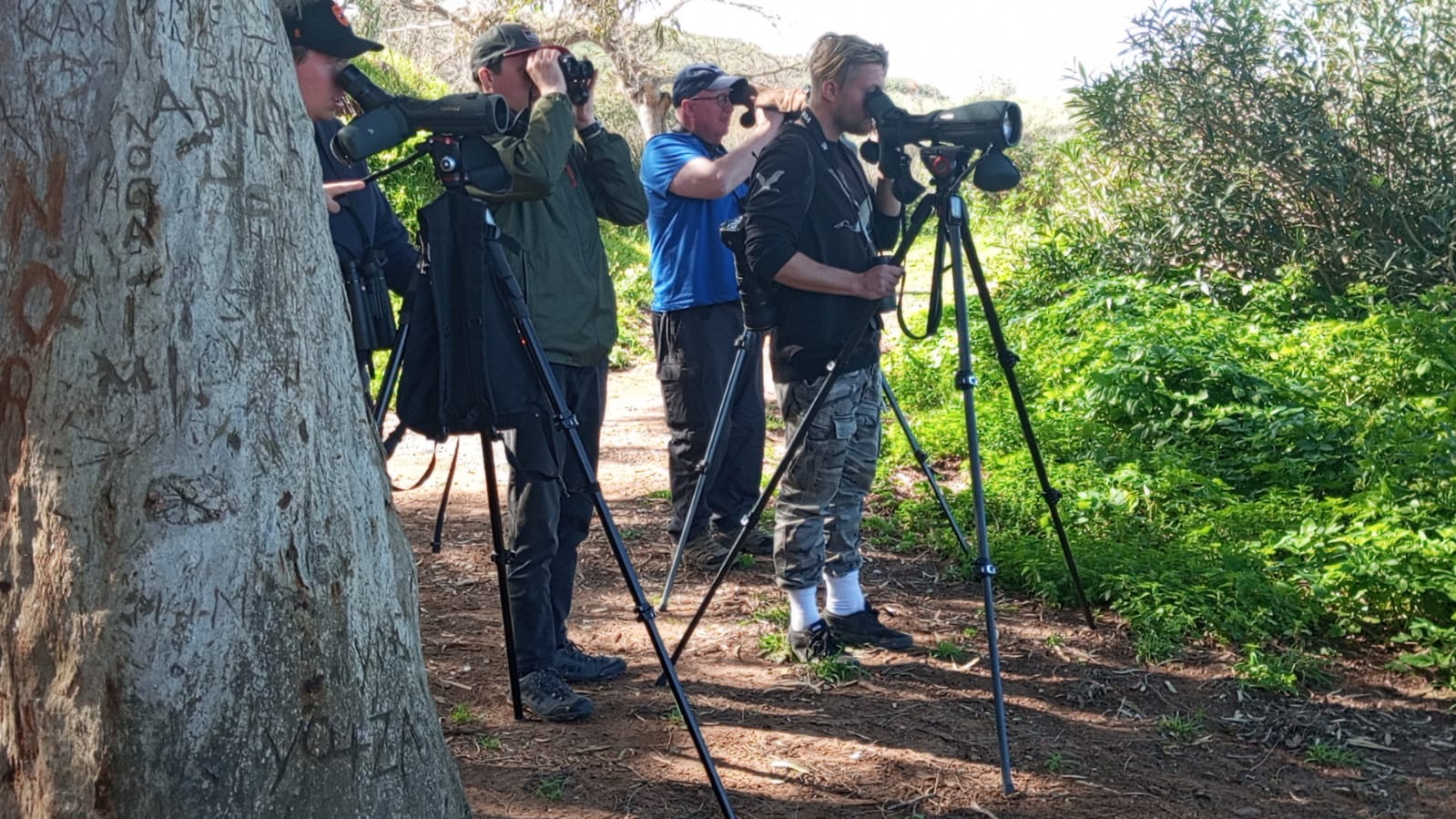
This is the type of itinerary where the number of habitats, rather than simply the number of days, drives the species total.

Why Two Weeks Does Not Automatically Mean 300 Species
It is tempting to assume that adding days will automatically add dozens of new birds.
It does not work that way.
Birdwatching follows a curve of diminishing returns.
During the first few days, almost every new habitat can add several new species.
Later, you may spend an entire morning seeing birds that are already on your list.
This is completely normal.
For example, you may see the same House Sparrow, Common Bulbul, White Wagtail, or Blackbird repeatedly throughout a trip.
That does not mean the day was unsuccessful.
Birding is about observation, not simply collecting names.
What Is a Good Species Count for a Beginner?
If you are new to birdwatching, do not compare your list with that of an experienced birder.
A beginner may finish a week-long trip with a considerably smaller list than someone who has spent decades learning European, North African, and Saharan birds.
That is perfectly normal.
You may spend fifteen minutes studying a single bird that an experienced birder identifies in five seconds.
But that fifteen minutes is part of the learning process.
Your first Morocco birding trip should ideally help you learn:
- How to use binoculars
- How to identify birds by shape
- How to recognize common calls
- How habitat affects bird distribution
- How to distinguish similar species
- How to record sightings
- How to observe without disturbing wildlife
Your species list will naturally grow as these skills improve.
Which Moroccan Habitats Give You the Most Variety?
Wetlands
Wetlands are among the most efficient habitats for building a species list.
Birds are often concentrated around relatively small areas of water, mud, reeds, and shallow feeding grounds.
This makes it possible to see many species without covering huge distances.
Forests
Forests are more challenging.
Birds may be hidden in foliage, and identifying them by sound becomes increasingly important.
The reward is access to species that you are unlikely to encounter in open desert or wetlands.
Mountains
Mountain birding is especially interesting for species adapted to altitude and rocky terrain.
It can also be visually spectacular.
Desert
Desert birding requires a different mindset.
The landscape may look empty, but experienced birders know where to search.
Water sources, tamarisk, rocky outcrops, wadis, agricultural edges, and areas of vegetation can all be important.
Atlantic Coast
The Atlantic coast provides a completely different bird community, particularly around lagoons, estuaries, and wetlands.
For travelers interested in maximizing species diversity, including coastal habitats can significantly broaden the list.
What Birds Should Be on Your Morocco Target List?
A trip list should include both common and special birds, but Morocco has several species that are particularly attractive to visiting birders.
Northern Bald Ibis
This endangered species is one of the country’s most important birds.
The Atlantic coast and Souss-Massa region are particularly significant for the species, making this area an important destination for birders with the Northern Bald Ibis high on their target list.
Moussier’s Redstart
One of Morocco’s most recognizable birds, this striking species is strongly associated with mountain habitats.
For many first-time visitors, it is one of the birds they most want to photograph.
Levaillant’s Woodpecker
This impressive woodpecker is associated with suitable forest habitats, especially in the Atlas region.
Finding one requires patience, careful listening, and attention to woodland structure.
Desert Sparrow
For a Sahara-focused trip, Desert Sparrow is one of the most interesting targets.
Its association with arid landscapes makes finding one feel very different from seeing a familiar European garden bird.
Cream-coloured Courser
This elegant desert specialist can be found in suitable open habitats and is another attractive target for birders exploring southern Morocco.
Pharaoh Eagle-Owl
This large owl is one of the most dramatic species associated with Morocco’s rocky desert landscapes.
Finding one is never something to take for granted, which makes an encounter particularly memorable.
Why Migration Can Change Your Species Count
Timing can dramatically affect your final list.
During spring migration, birds moving north may pass through Morocco on their way toward European breeding grounds.
Autumn migration brings another wave of movement as birds travel south.
This means a site that feels relatively quiet during one period can become much more productive during migration.
Migration can also introduce species that are not present throughout the year.
For travelers interested in maximizing their species count, planning around spring or autumn migration can therefore be a smart strategy.
However, migration is not the only reason to visit.
Winter brings important concentrations of waterbirds, while summer can be particularly interesting for desert-adapted species.
How to Maximize the Number of Birds You See
If your main objective is building a large species list, a few practical decisions can make a significant difference.
Start Early
Bird activity is often strongest after sunrise.
This becomes especially important in hot southern regions.
Spend Less Time in the Car
Long transfers are sometimes unavoidable in Morocco, but your itinerary should include dedicated birding time.
A shorter route with more observation can be more productive than a huge circuit with constant driving.
Visit Different Habitats
This is one of the most important strategies.
Do not spend an entire trip searching the same environment.
Use Your Ears
Learning bird calls can dramatically increase the number of species you detect.
Some birds will be much easier to locate acoustically than visually.
Keep a Daily Checklist
Record:
- Species
- Location
- Date
- Time
- Habitat
- Interesting behavior
A daily list helps you notice patterns and avoid confusion later.
Do Not Ignore Common Birds
Common species teach you the fundamentals of identification.
Once you can quickly recognize common birds, you can concentrate your attention on more difficult species.
Should You Focus on a High Species Count?
That depends on what kind of traveler you are.
Some birders love lists.
They enjoy comparing their Morocco checklist with previous trips and trying to find as many new species as possible.
Others are more interested in a handful of special encounters.
For example, watching a Northern Bald Ibis feeding naturally, seeing a Moussier’s Redstart at close range, or finding a Pharaoh Eagle-Owl at dusk can be more memorable than adding ten common species.
A successful birdwatching holiday does not have to produce the biggest possible checklist.
The quality of the experience matters too.
A Realistic Way to Plan Your Trip
If you are planning a Morocco birding holiday mainly around species diversity, think in terms of habitat coverage rather than simply counting days.
For a very short trip, focus on one region.
For five to seven days, combine two or three major habitats.
For ten days, start connecting mountain, desert, wetland, and coastal environments.
For fourteen days, you can build a much broader circuit that gives you time to search for specialist species while still allowing flexibility for weather and unexpected sightings.
The birding specialists at Wild Bird Watching Morocco currently organize itineraries ranging from short focused experiences to longer multi-habitat birding journeys, which illustrates how different trip lengths can be adapted to different birding goals.
The important thing is to choose a route based on what you want to see, not simply how many days you have available.
FAQ's
How many bird species can you see in Morocco in 5 days?
A realistic broad range for an experienced birder is around 80–130 species on a well-planned five-day trip, although the actual number can vary considerably depending on season, habitats, weather, and route.
How many species can you see in Morocco in 7 days?
A productive seven-day itinerary can potentially produce around 120–160 species for an experienced birder, particularly when several different habitats are included.
→ 7 Days Morocco Atlas & Sahara Birding Tour from Marrakech
Can you see 200 bird species in Morocco?
Yes. Around 200 species is achievable on a comprehensive trip covering multiple Moroccan ecosystems. Experienced birders on 10–14 day multi-habitat tours can potentially reach approximately 200–280 species in favorable conditions.
Can a beginner see 100 bird species in Morocco?
Yes, it is possible, but it should not be treated as a guarantee. Identification experience, season, habitat, and route all have a major influence on the final number.
Is Morocco good for birdwatching beginners?
Absolutely. You do not need to be an expert to enjoy birdwatching in Morocco. The country’s variety of landscapes means beginners can encounter many different types of birds while gradually developing their identification skills.
So, how many bird species can you see in Morocco? A short three-day trip can produce a useful selection of species when focused on one productive region, while five days can give you a solid introduction to several habitats. Around seven days can potentially produce a list in the 120–160 range for experienced birders, while a well-planned ten-day trip can move into the 160–220 range. For serious birders with fourteen days available, around 200–280 species can be a realistic high-level target under favorable conditions. These are planning ranges rather than guarantees, because season, weather, habitat, migration, and identification skills all affect the final result.