Birdwatching in Morocco for Beginners: What to Know Before You Go
If you are new to birdwatching, Morocco is an excellent place to start.
You do not need an expensive camera, years of experience, or a long species list to enjoy birdwatching in Morocco. What you do need is curiosity, a little patience, and enough time to slow down and notice what is happening around you.
Morocco is particularly rewarding because its landscapes change dramatically within relatively short distances. You can watch shorebirds and gulls along the Atlantic coast, look for woodland species in the Middle Atlas, search for raptors in mountain valleys, and explore desert habitats where specialized birds have adapted to extremely dry conditions.
The country is also an important meeting point between Europe and Africa. Spring and autumn migration bring large numbers of birds through Morocco, while resident species make the country worthwhile for birders throughout the year.
If this is your first birding trip, this guide explains what to expect, when to go, what equipment you actually need, where beginners should start, and how to make your first Morocco birdwatching holiday enjoyable rather than overwhelming.
Why Morocco Is Great for Beginner Birdwatchers
One of the biggest advantages of birdwatching in Morocco is habitat diversity.
You can move between very different environments during a single trip:
- Atlantic beaches, lagoons, and wetlands
- Mediterranean-influenced northern landscapes
- Cedar forests of the Middle Atlas
- High Atlas mountain valleys
- Semi-arid plains
- Dades, Todgha, and Ziz valleys
- Sahara desert and surrounding rocky landscapes
Each habitat brings different birds.
The website’s birding specialists highlight the Sahara for desert-adapted species, the Atlas Mountains for species such as Moussier’s Redstart and Levaillant’s Woodpecker, and Atlantic wetlands for flamingos, spoonbills, gulls, and other waterbirds.
This variety is especially useful for beginners because you do not have to travel specifically to find one type of bird. Instead, you can learn how birds use different environments as you travel.
What Is Birdwatching Actually Like?
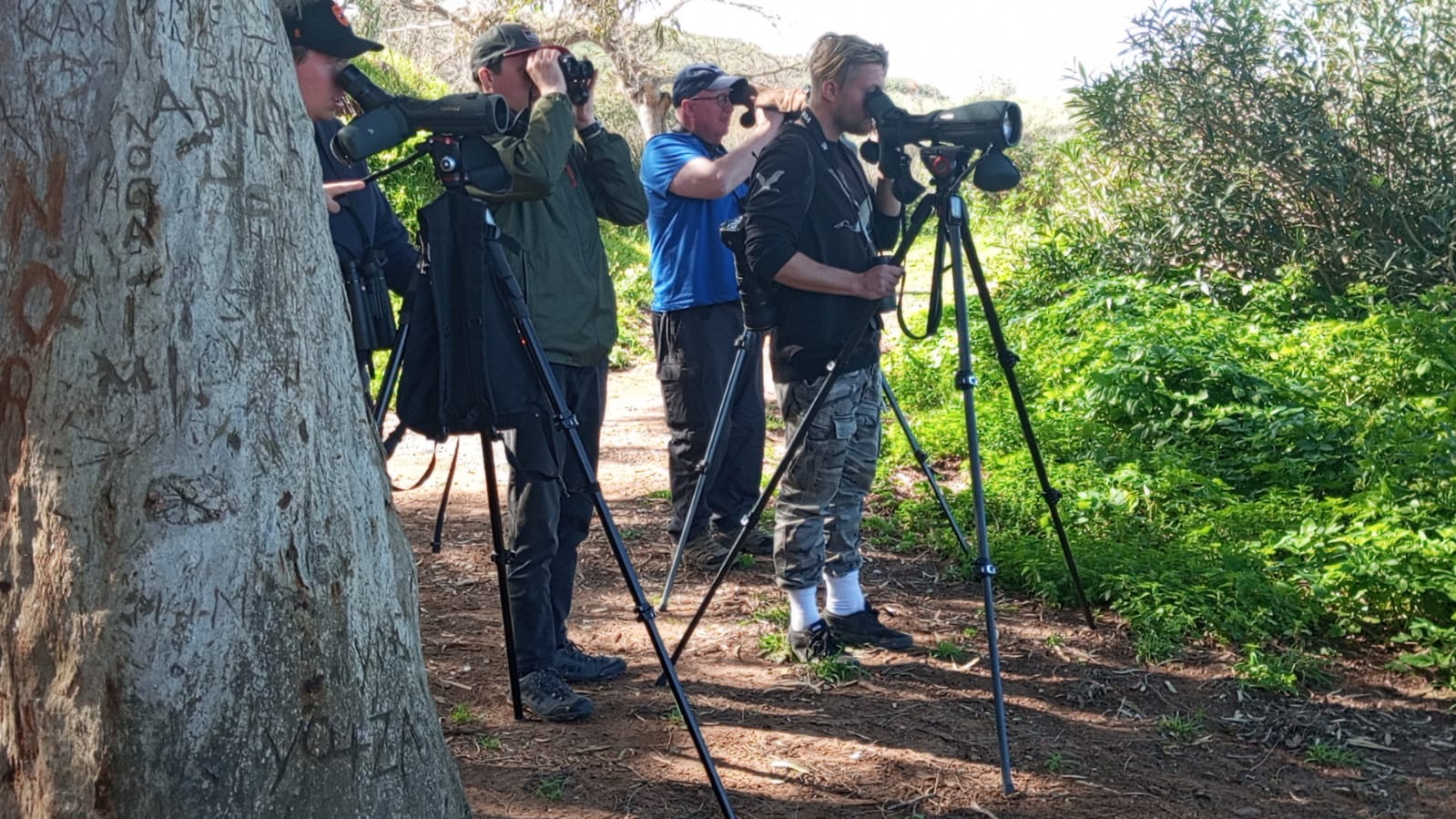
If you have never been birdwatching before, you may imagine spending hours standing completely still with binoculars.
Sometimes that happens. But birdwatching is much more varied than that.
A typical morning might involve:
- Leaving your accommodation before breakfast.
- Driving to a promising habitat.
- Listening for bird calls before searching visually.
- Walking slowly along a trail or road.
- Stopping frequently to scan trees, bushes, cliffs, fields, or water.
- Identifying birds with binoculars or a field guide.
- Taking photographs when conditions allow.
- Returning for breakfast or continuing to another location.
The pace depends on the destination and your goals.
A beginner who simply wants to enjoy wildlife may spend ten minutes watching one bird. A more experienced birder might move quickly because they are trying to find a particular species.
There is no correct way to do it.
When Is the Best Time for Birdwatching in Morocco?
Morocco can be good for birdwatching throughout the year, but the experience changes considerably by season.
According to Wild Bird Watching Morocco, spring from March to May is particularly strong for breeding birds and northbound migration, while autumn from September to November is excellent for southbound migration, raptors, and waterbirds. Winter can produce impressive concentrations of wildfowl and waders, while summer is especially suitable for Saharan specialists.
|
Season |
What Beginners Can Expect |
|
Spring |
Migration, breeding activity, resident species |
|
Summer |
Desert birds and warm-weather species |
|
Autumn |
Migration, raptors, waterbirds |
|
Winter |
Wetlands, waders, wildfowl, coastal birding |
Spring: March to May
Spring is one of the most exciting times to visit.
Migratory birds are moving north while resident birds are becoming increasingly active. Breeding behavior can also make identification more interesting because birds may be singing, displaying, defending territories, or carrying nesting material.
For a first serious birding trip, spring is an excellent choice.
Summer: June to August
Summer can be hot, particularly in southern Morocco and the desert.
However, it can be rewarding if your main interest is desert birding. Early mornings become particularly important because temperatures rise quickly later in the day.
Plan outdoor birding around the cooler hours rather than expecting to spend an entire afternoon walking in exposed terrain.
Autumn: September to November
Autumn is another excellent migration period.
Raptors and other migrants move south, and coastal wetlands can become particularly interesting for waterbirds.
For beginners who want to experience the spectacle of migration without visiting in spring, autumn is a strong alternative.
Winter: December to February
Winter is particularly interesting around wetlands, lagoons, estuaries, and coastal habitats.
You may encounter large concentrations of waterbirds while temperatures are generally more comfortable than during summer.
Discover Morocco Through Birdwatching
Discover Morocco’s best birdwatching destinations with expert-guided tours designed for bird lovers, photographers, and wildlife enthusiasts.
Where Should Beginners Go Birdwatching in Morocco?
You do not need to cross the entire country to have a successful first birding experience.
However, choosing habitats carefully makes a major difference.
1. Atlantic Wetlands and Lagoons
Wetlands are often among the easiest places for beginners because birds can be relatively visible against open water and mudflats.
The Atlantic coast includes lagoons, estuaries, beaches, marshes, and river mouths that attract different groups of birds.
Oualidia, for example, is highlighted for flamingos, spoonbills, and Audouin’s Gulls, while Souss-Massa provides a much broader combination of wetlands, dunes, reed beds, and coastal habitats.
2. The Middle Atlas
If you enjoy forests, the Middle Atlas offers a completely different birding experience.
The cedar forests around areas such as Azrou and Ifrane are important for woodland species, including Levaillant’s Woodpecker. Other birds may be found by scanning trunks, branches, forest edges, and open clearings.
This is a good environment for learning how to identify birds by habitat rather than simply by appearance.
3. The High Atlas
Higher elevations introduce another group of species and different birding conditions.
Above approximately 2,000 metres, rocky slopes, alpine meadows, cliffs, and mountain villages can produce species such as Atlas Wheatear, Moussier’s Redstart, and Crimson-winged Finch.
Remember that altitude affects temperature and walking conditions. Even if your trip takes place during a warm season, mountain mornings can be surprisingly cold.
4. The Sahara
The Moroccan Sahara is one of the most exciting environments for a beginner because the landscape itself is unforgettable.
Birding here requires a slightly different approach.
Instead of expecting birds everywhere, look carefully around:
- Tamarisk vegetation
- Water sources
- Rocky outcrops
- Desert tracks
- Oases
- Open gravel plains
Potential species include Desert Sparrow, Cream-coloured Courser, Desert Warbler, sandgrouse, Pharaoh Eagle-Owl, and other desert specialists.
What Birds Can You See in Morocco?
You should not arrive expecting to see every famous species on your first morning.
Instead, build your list gradually.
Some of the species that make Morocco especially attractive to birdwatchers include:
- Northern Bald Ibis
- Moussier’s Redstart
- Levaillant’s Woodpecker
- Desert Sparrow
- Atlas Wheatear
- Double-spurred Francolin
- African Marsh Owl
- Cream-coloured Courser
- Pharaoh Eagle-Owl
- Audouin’s Gull
These are among the signature species highlighted by Wild Bird Watching Morocco.
For a beginner, however, common species are equally important.
Learning to recognize familiar gulls, sparrows, wagtails, herons, egrets, doves, and raptors will make it much easier to identify rarer birds later.
Do You Need Binoculars for Birdwatching?
Yes, binoculars are probably the single most useful piece of equipment you can bring.
You do not need the most expensive model available.
For beginners, 8×42 or 10×42 binoculars are excellent general-purpose choices.
The first number represents magnification, while the second relates to the diameter of the objective lens.
8×42 vs. 10×42
8×42 binoculars are often easier for beginners because they provide a wider field of view and are generally more forgiving when trying to locate a moving bird.
10×42 binoculars provide greater magnification, which can be useful for distant birds, but they may take a little more practice to use comfortably.
If you are buying binoculars specifically for your first Morocco birdwatching trip, prioritize:
- Comfortable handling
- Good image clarity
- Reasonable weight
- Waterproof or weather-resistant construction
- Reliable focusing
You do not need premium optics to start enjoying birds.
What Other Equipment Should You Bring?
Keep your birding kit simple.
Essential
- Binoculars
- Comfortable walking shoes
- Sun protection
- Reusable water bottle
- Lightweight backpack
- Field notebook or birding app
- Mobile phone
- Appropriate outdoor clothing
Useful
- Camera with a telephoto lens
- Portable power bank
- Small flashlight or headlamp
- Hat
- Sunglasses
- Light rain jacket
- Insect repellent
For Desert Birding
If your itinerary includes the Sahara, add:
- Extra water
- Sun protection
- Lightweight long-sleeved clothing
- Dust protection for camera equipment
- Layers for cold early mornings
Do not underestimate the temperature difference between sunrise and midday in desert environments.
Should You Bring a Camera?
Only if photography is important to you.
You can have a fantastic birdwatching experience without taking a camera.
If you do bring one, avoid making photography the only objective. A bird that looks tiny through a camera lens may still be fascinating through binoculars.
Morocco is particularly attractive for bird photography because of its dramatic landscapes and strong early-morning and late-afternoon light. Wild Bird Watching Morocco also offers dedicated bird photography experiences designed around photography conditions and access.
For beginners, a camera with a moderate telephoto lens is enough to start learning.
Do You Need to Know Bird Names Before You Go?
Absolutely not.
In fact, trying to memorize hundreds of species before your trip can make birdwatching unnecessarily stressful.
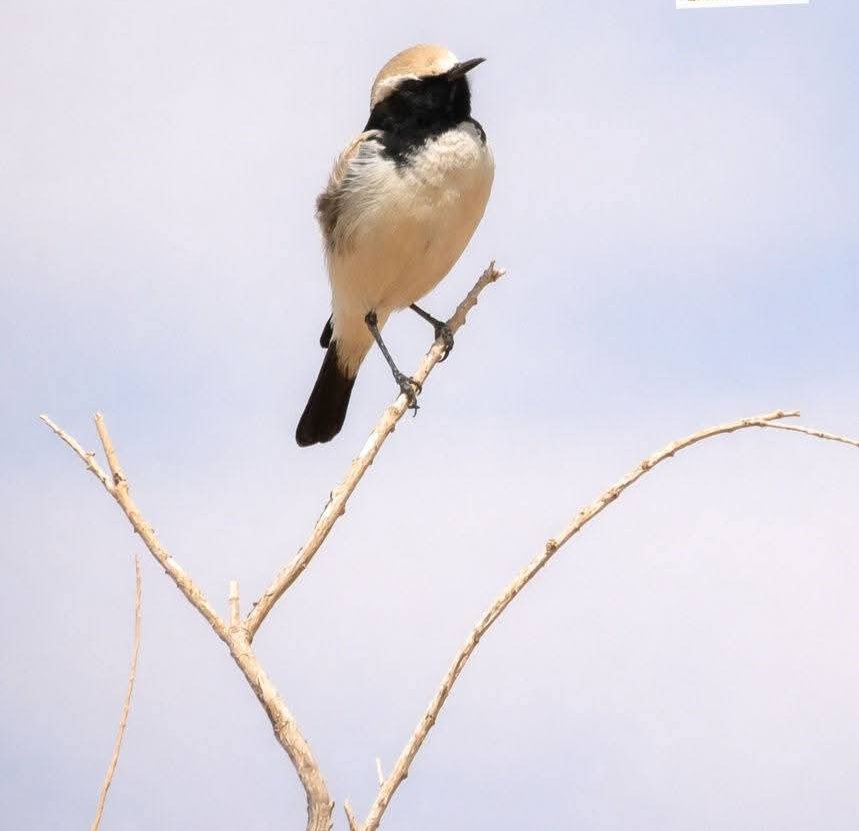
Instead, learn a small group of birds that you are especially interested in.
For example, you might choose:
- Moussier’s Redstart
- Northern Bald Ibis
- Levaillant’s Woodpecker
- Desert Sparrow
- Flamingo
Then learn their:
- Shape
- Size
- Main colors
- Habitat
- Typical behavior
- Call, if possible
Once you can recognize these confidently, start adding more species.
Learn to Identify Birds by Habitat
One of the biggest beginner mistakes is trying to identify every bird only from its appearance.
Habitat provides an enormous clue.
If you are standing beside a lagoon and see a large pink bird, flamingo becomes an obvious possibility.
If you are walking through cedar forest and hear repeated tapping against a tree trunk, a woodpecker becomes more likely.
If you are in open desert terrain, your shortlist should be completely different.
Think like this:
Where am I? → What habitats are around me? → Which birds normally use this habitat?
This simple process will make identification much easier.
Learn to Listen Before You Look
Birdwatching is not only visual.
Sometimes you hear a bird long before you find it.
Pause regularly and listen for:
- Singing
- Calls
- Alarm notes
- Wingbeats
- Woodpecker drumming
Your guide can help explain which sounds are important.
Over time, learning bird calls can become one of the most rewarding parts of birdwatching.
Why a Local Birding Guide Can Make a Huge Difference
For your first trip, a knowledgeable local guide can dramatically improve the experience.
The biggest advantage is not simply knowing bird names.
A good guide knows:
- Which habitats are productive
- Where particular species are regularly found
- How birds behave
- When to visit a site
- How to approach birds without disturbing them
- How to identify unfamiliar calls
- How to adapt when weather changes
This is particularly valuable in a country as geographically diverse as Morocco.
The team behind Wild Bird Watching Morocco specifically welcomes beginners and states that guides adapt their approach to different levels of experience. Their tours are also kept to a maximum of six participants, with private trips available.
Choosing Your First Morocco Birding Tour
Your first birding tour does not need to be two weeks long.
If you are unsure whether birdwatching is for you, a shorter itinerary can be a good introduction.
For travelers starting from Marrakech, the 5 Days Birding Tour Morocco from Marrakech is a practical option to consider. The site also offers a 5 Days Morocco Atlas & Sahara Birding Tour from Marrakech for travelers who want to combine mountain and desert habitats.
If you have more time, a longer itinerary allows you to experience several major ecosystems.
The 10 Days Morocco Atlas, Sahara & Souss Birding Tour from Marrakech combines three particularly important birding environments and is better suited to travelers who want a broader introduction to Moroccan birdlife.
For a shorter experience focused on the desert, the 3-Day Marrakech to Merzouga Birding Safari is another option listed by the site.
When comparing tours, look beyond the number of days. Check how much time is actually spent birding, how early the days begin, what habitats are included, and whether the itinerary is designed around your experience level.
How Much Walking Is Involved?
It depends heavily on the itinerary.
Some birding involves gentle walks along roads, wetlands, forest tracks, or open terrain. Other locations may involve uneven ground, rocky trails, steep slopes, or high-altitude walking.
Ask about the walking requirements before booking if you have limited mobility or simply prefer a relaxed pace.
A good birding itinerary should leave room for observation rather than turning every day into a race between locations.
What Should You Wear?
Layering is the safest approach.
Morocco’s climate varies dramatically between regions and times of day.
A practical birding outfit includes:
- Comfortable trousers
- Breathable shirt
- Lightweight fleece or jacket
- Comfortable walking shoes
- Hat
- Sunglasses
- Sun protection
For mountain areas, bring warmer layers.
For the desert, choose lightweight clothing that protects you from the sun while remaining comfortable.
Neutral colors are generally preferable for wildlife watching because they attract less attention than very bright clothing.
Birdwatching Etiquette: How to Watch Birds Responsibly
Good birdwatching means putting the welfare of the birds first.
Never chase a bird simply to obtain a photograph.
Avoid approaching nests or breeding colonies unnecessarily. Keep a respectful distance, follow local guidance, and avoid loud noises around sensitive habitats.
Particular care is important around endangered species such as the Northern Bald Ibis.
Responsible birdwatching helps ensure that these remarkable places remain valuable for wildlife and enjoyable for future visitors.
A Simple Beginner’s Birdwatching Strategy
If this is your first morning in the field, try this approach:
Step 1: Start Early
Bird activity is often strongest during the cooler morning hours.
Step 2: Choose One Habitat
Do not immediately try to cover an entire region.
Spend time learning one environment.
Step 3: Scan Slowly
Look at trees, bushes, rocks, water, fences, and the ground.
Step 4: Listen
Stop walking occasionally and simply listen.
Step 5: Identify Before Photographing
Try to understand what you are seeing before reaching for your camera.
Step 6: Record Your Sightings
Write down the species, location, time, and any interesting behavior.
Step 7: Enjoy the Experience
Your first trip is not a competition.
Seeing ten species well can be more rewarding than rushing around trying to record fifty.
FAQ's
Is birdwatching in Morocco suitable for complete beginners?
Yes. You do not need previous birding experience. Wild Bird Watching Morocco specifically welcomes complete beginners and adapts guiding to different experience levels.
What is the best month for birdwatching in Morocco?
There is no single best month for every species. March to May is excellent for spring migration and breeding birds, while September to November is strong for autumn migration. Winter is particularly interesting for wetland birds, and summer can be productive for desert species.
How many days do I need for a first birding trip?
Five days can provide a good introduction, while seven to ten days gives you more opportunities to experience different habitats. Longer trips are better if you want a large species list.
What binoculars should a beginner use?
8×42 binoculars are an excellent starting point because they offer a useful balance between magnification, field of view, brightness, and portability.
Can I combine birdwatching with a normal Morocco holiday?
Absolutely. Birdwatching can be incorporated into a wider Morocco trip, particularly around Marrakech, the Atlas Mountains, the Sahara, Agadir, and the Atlantic coast.
Birdwatching in Morocco does not have to be complicated.
Start with a good pair of binoculars, choose the right season, learn a few common species, and give yourself enough time to observe rather than rush. The country’s extraordinary variety of habitats means that even beginners can experience a surprisingly diverse range of birds during a single trip.
From flamingos and coastal gulls to Moussier’s Redstart in the mountains and Desert Sparrow in the Sahara, Morocco offers an impressive introduction to the world of birdwatching. And you do not need to be an expert to appreciate it.
Your first Moroccan birding trip is simply the beginning. Once you learn to notice the movement in a tree, recognize a distant silhouette, or identify a bird from its call, ordinary travel starts to look very different. For travelers ready to take that first step, exploring Morocco with an experienced birding guide can turn a holiday into a genuine wildlife adventure.