Saving the Northern Bald Ibis: Morocco’s Conservation Success Story
Few birds tell the story of conservation in Morocco as powerfully as the Northern Bald Ibis (Geronticus eremita).
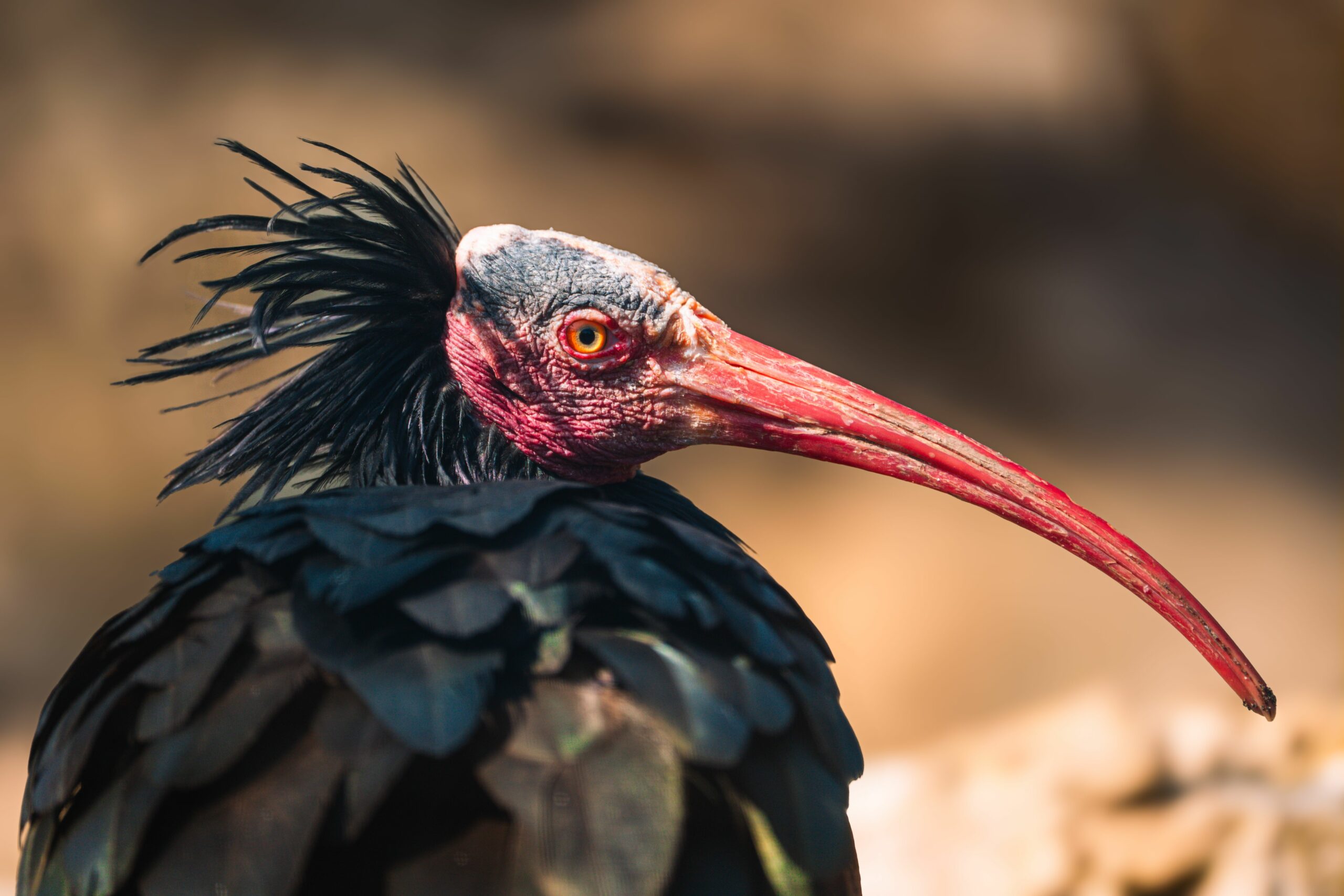
With its glossy black plumage, bare red head, long curved bill, and unmistakable silhouette, the species looks almost prehistoric. Yet behind this striking appearance is one of the most remarkable conservation stories in modern bird conservation.
The Northern Bald Ibis was once widespread across parts of Europe, North Africa, and the Middle East. During the 20th century, however, its range collapsed dramatically. Hunting, disturbance, habitat loss, changes in land use, and other pressures pushed the species towards extinction. By the late 1990s, the wild population had fallen to just 59 breeding pairs.
Morocco became the last stronghold of the species in the wild.
Decades of protection, monitoring, habitat management, research, and cooperation between Moroccan authorities, conservation organizations, local communities, and field wardens have helped reverse that decline. In 2018, the species was downlisted from Critically Endangered to Endangered, a major milestone that recognized the improvement in its conservation status.
But this is not a story about a bird that has simply been “saved.” The Northern Bald Ibis remains endangered, and its survival still depends on continued protection.
That is what makes Morocco’s experience so important: it demonstrates that targeted conservation can work, while also showing how much effort is required to keep a rare species on the path to recovery.
What Is the Northern Bald Ibis?
The Northern Bald Ibis is a large colonial bird belonging to the ibis family.
It is easily recognized by its:
- Glossy dark plumage
- Bare reddish face and head
- Long, curved red bill
- Long neck
- Broad wings
- Long legs
- Distinctive silhouette in flight
Unlike many birds that are difficult for beginners to identify, the Northern Bald Ibis is relatively unmistakable once you know what you are looking for.
Historically, however, simply recognizing the species was not enough to protect it.
Its populations disappeared from much of its former range, leaving only a small number of surviving wild birds.
Today, Morocco is exceptionally important because it supports the world’s only remaining wild breeding population of the species. BirdLife continues to describe Morocco as home to the world’s only wild population of the Endangered Northern Bald Ibis.
How Close Was the Northern Bald Ibis to Extinction?
The history of the species is a warning about how quickly a widespread bird can become extremely rare.
The Northern Bald Ibis once occurred across a much larger area of southern Europe, North Africa, and the Middle East.
Over time, populations disappeared from many regions.
By the late 20th century, the situation had become critical.
In 1997, the wild population reached an estimated low of only 59 breeding pairs.
At that point, conservationists were not dealing with a species that needed a small adjustment to its management.
They were dealing with a bird that was dangerously close to disappearing from the wild.
The remaining Moroccan colonies therefore became a conservation priority.
The creation of Souss-Massa National Park in 1991 was an important foundation for protecting the species and its habitat. BirdLife conservationists have emphasized that without the park, there would have been little hope for the remaining wild population. But creating a protected area was only the beginning.
Why Souss-Massa National Park Matters
Located along Morocco’s Atlantic coast south of Agadir, Souss-Massa contains a mixture of coastal cliffs, dunes, wetlands, river systems, agricultural landscapes, and open feeding areas.
This combination is important for the Northern Bald Ibis.
The birds breed on cliffs and use surrounding landscapes for feeding.
Protecting only the nesting cliffs would therefore not have been enough.
The conservation effort had to consider the wider landscape used by the birds.
This is one of the most important lessons from the Moroccan experience.
A species cannot survive simply because its nest is protected.
It also needs safe feeding areas, suitable habitat, relatively low disturbance, and effective monitoring throughout its range.
The nearby Tamri area has also become particularly important. Ramsar documentation identifies the Cap Ghir-Imsouane site, including Tamri, as a nesting and wintering area for many birds and notes that the Northern Bald Ibis uses the area.
The Role of Local Wardens
One of the most important elements of Morocco’s Northern Bald Ibis conservation story has been the work of local wardens.
Protecting a colony on paper is one thing.
Watching it every day is another.
Wardens can detect problems quickly, monitor breeding activity, observe disturbances, and help ensure that people do not approach sensitive areas unnecessarily.
BirdLife’s account of the Moroccan recovery highlights the importance of continuous surveillance at the breeding colonies and roosting sites. It also describes how local wardens were recruited and trained to work near the colonies.
This local presence became a crucial part of the conservation system.
It also illustrates a broader principle of wildlife conservation:
People living close to important habitats are often essential to protecting them.
Conservation is not only about scientific research or legislation. It also depends on people being present on the ground.
From 59 Pairs to a Growing Wild Population
The recovery of the Moroccan population is what makes this story so remarkable.
BirdLife reported that the Moroccan wild population reached at least 708 birds by 2019, including a record 170 chicks fledged during that season. The population had increased from 589 birds in 2017.
Earlier monitoring had already shown substantial improvement.
BirdLife reported 601 individuals in Morocco at the end of the 2016 breeding season, with 122 breeding pairs recorded across the Souss-Massa and Tamri colonies at that time.
These figures demonstrate why the species’ conservation status eventually improved.
But the numbers should be interpreted carefully.
A population of several hundred birds may represent an enormous improvement from 59 pairs, but it is still extremely small compared with the historical range of the species.
Recovery is therefore not the same thing as security.
Why the Species Was Downlisted in 2018
One of the most significant moments in the conservation story came in November 2018, when the Northern Bald Ibis was downlisted from Critically Endangered to Endangered.
BirdLife described the change as recognition of sustained conservation efforts and population growth in Morocco.This is a major achievement.
However, “Endangered” should not be misunderstood as “safe.”The species still faces a high risk of extinction in the wild. The downlisting means that the conservation situation improved enough to move the species into a lower threat category. It does not mean that conservation can stop.
In fact, the success creates a new responsibility. Once a species begins recovering, conservationists need to make sure the gains are maintained.
What Actually Made the Recovery Possible?
There was no single solution.
The Moroccan success resulted from several measures working together.
1. Protecting Breeding Colonies
The first priority was protecting the remaining breeding sites.
If adult birds can successfully breed and raise chicks, the population has a chance to grow naturally.
Reducing disturbance around colonies was therefore fundamental.
2. Protecting Feeding Areas
The birds need more than nesting cliffs.
They depend on surrounding feeding landscapes, meaning that conservation has to extend beyond the colony itself.
3. Regular Monitoring
Bird populations can change quickly.
Continuous monitoring helps conservationists understand:
- How many pairs are breeding
- How many chicks are produced
- Where colonies are located
- Whether birds are successfully fledging
- Whether new breeding attempts are occurring
- What threats are appearing
Without this information, conservation decisions become much more difficult.
4. Local Conservation Staff
The presence of trained wardens created a practical layer of protection between the birds and potential disturbance.
Their work also provided valuable information about the behavior and breeding success of the colonies.
5. Government and NGO Cooperation
The Moroccan government and conservation organizations have worked together over decades.
BirdLife’s account describes a long sequence of collaboration involving the Moroccan government, the RSPB, SEO/BirdLife, GREPOM, and other partners.
This continuity matters.
Conservation projects often fail when funding, expertise, or field presence disappears after a few years.
The Northern Bald Ibis story demonstrates the value of sustained commitment.
The Importance of GREPOM
GREPOM, BirdLife in Morocco, has played an important role in the country’s bird conservation efforts.
Its work on the Northern Bald Ibis has included monitoring, habitat management, and cooperation with national authorities.
More recent conservation work shows that the effort has not stopped.
In 2023, GREPOM/BirdLife worked with Morocco’s National Agency for Water and Forests to improve Northern Bald Ibis breeding sites in the Souss-Massa region. The work included clearing accumulated sand and other material from nest areas and creating additional areas suitable for new nests.
This is an important reminder that conservation is often practical and hands-on.
Sometimes protecting a species means conducting scientific research.
Sometimes it means restoring habitat.
And sometimes it means physically improving a breeding site so birds can use it.
Discover Morocco Through Birdwatching
Discover Morocco’s best birdwatching destinations with expert-guided tours designed for bird lovers, photographers, and wildlife enthusiasts.
New Breeding Sites Are an Encouraging Sign
Population growth is important, but geographic expansion can be equally encouraging.
BirdLife reported that as the Moroccan colonies grew, Northern Bald Ibises began appearing at additional locations along the coast, including two new sites and isolated breeding pairs discovered in 2017.
This suggests that the population was not simply becoming larger inside one small colony.
It was beginning to occupy additional breeding locations.
For a species with such a restricted wild distribution, that matters enormously.
A population concentrated in one location can be highly vulnerable to a single catastrophic event.
Several breeding sites provide greater resilience.
Why the Northern Bald Ibis Is Still Not Safe
It would be easy to read Morocco’s conservation story and conclude that the problem has been solved.
It has not.
BirdLife has repeatedly emphasized that downlisting to Endangered does not mean the species is saved. New breeding sites can still be vulnerable, and some are outside fully protected areas.
This is one of the most important points travelers should understand.
A conservation success story can still contain serious risks.
Potential pressures include:
- Human disturbance
- Habitat degradation
- Changes in land use
- Disturbance near breeding colonies
- Loss of suitable feeding habitat
- Environmental changes
- Uncontrolled access to sensitive areas
The species’ very small global wild range also means that local problems can have international consequences.
Why Morocco’s Story Matters Beyond One Bird
The Northern Bald Ibis is more than a conservation symbol.
Its recovery provides a practical example of how endangered species can respond when conservation is sustained over decades.
The story combines:
Protected areas + scientific monitoring + local wardens + habitat management + government support + conservation organizations + community engagement.
Remove one of these elements and the system can become weaker.
This is why Morocco’s experience has relevance far beyond the ibis itself.
BirdLife’s State of the World’s Birds identifies the Northern Bald Ibis as an example of a threatened bird that has benefited from targeted recovery action and was subsequently downlisted from Critically Endangered to Endangered in 2018.
The Connection Between Conservation and Local Communities
Successful conservation cannot happen in isolation from people.
The Northern Bald Ibis colonies exist within landscapes where people live, work, travel, farm, fish, and use natural resources.
Conservation organizations have therefore emphasized awareness and local involvement.
BirdLife’s account of the Moroccan project describes efforts to communicate the value of the species to local communities and recruit local people as wardens.
This approach has two benefits.
First, local people become part of the protection system.
Second, conservation becomes connected to the landscape rather than being something imposed from outside.
That relationship can be especially important for long-term conservation.

Why Responsible Birdwatching Matters
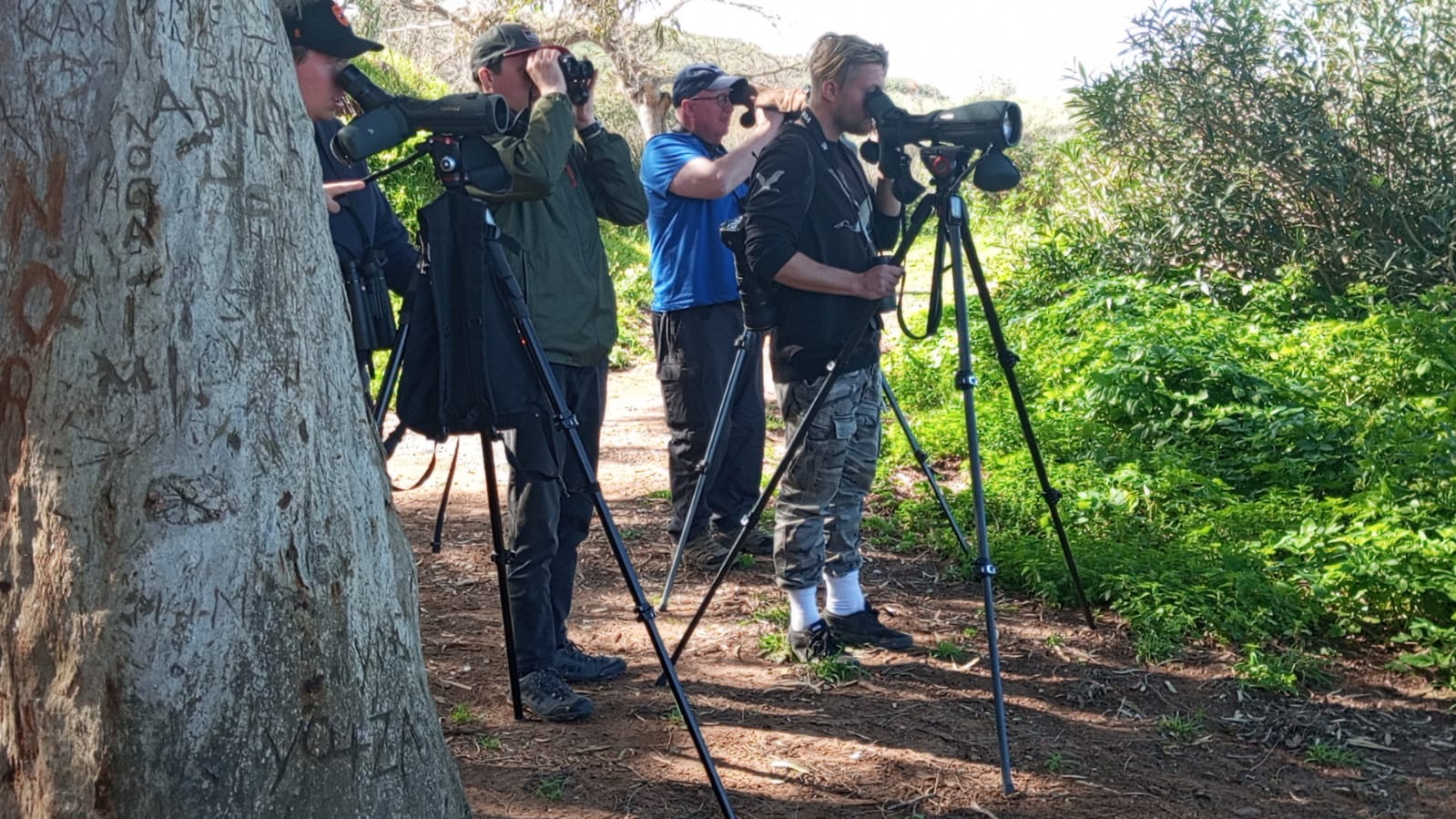
For travelers, the Northern Bald Ibis story comes with an important responsibility.
Seeing an endangered bird in the wild is an extraordinary experience.
But the bird’s welfare must always come first.
Visitors should never:
- Approach breeding colonies too closely
- Enter restricted areas
- Flush birds for photographs
- Chase birds to obtain a better view
- Use playback excessively
- Block feeding routes
- Disturb roosting birds
- Ignore instructions from wardens or guides
A good wildlife encounter should leave the bird behaving normally.
If your presence causes a bird to repeatedly move away, you are probably too close.
How Birdwatchers Can Support Conservation
Birdwatching can contribute positively to conservation when it is conducted responsibly.
Choosing experienced local guides helps create economic value around wildlife expertise.
Following access restrictions helps protect sensitive habitats.
Sharing accurate information about endangered species can also increase public awareness.
And perhaps most importantly, birdwatchers can demonstrate that living wildlife has value beyond direct exploitation.
Morocco’s birdwatching industry benefits from the country’s exceptional bird diversity, but the long-term future of that diversity depends on keeping the habitats and species healthy.
Where Can You Learn About the Northern Bald Ibis in Morocco?
The Souss-Massa region is the key area to understand the Moroccan conservation story.
The region contains important breeding and feeding habitats for the species, while nearby coastal sites such as Tamri also have major conservation significance. Ramsar’s documentation for Cap Ghir-Imsouane notes that the Northern Bald Ibis nests there and that more than 20% of its global population was historically divided between that site and Souss-Massa National Park.
For birdwatchers interested in seeing the species, however, conservation should remain the priority.
A sighting is a privilege, not an entitlement.
If you are planning a wider birdwatching journey through Morocco, the 10 Days Morocco Atlas, Sahara & Souss Birding Tour from Marrakech is one existing itinerary that connects the southern region with several of the country’s major birding habitats.
For travelers who want to explore the Souss region alongside the Anti-Atlas and desert edge, the 9 Days Morocco Birding Tour — Anti-Atlas, Sahara Edge & Souss Region provides another route through this exceptionally diverse part of the country.
The important distinction is that the purpose of such a journey should not be simply to obtain a photograph of a rare bird.
The real value is understanding the habitat, the species, and the conservation work that allows it to survive.
What the Northern Bald Ibis Can Teach Us About Conservation
The Northern Bald Ibis provides several valuable lessons.
Conservation Takes Time
The Moroccan recovery was not achieved in one season.
It required decades of monitoring, protection, cooperation, and persistence.
Protected Areas Matter
The creation of Souss-Massa National Park provided an essential foundation for protecting the remaining population.
Local People Matter
Wardens and local communities have played an important role in protecting colonies and maintaining daily surveillance.
Species-Specific Action Can Work
The recovery demonstrates that carefully targeted action can reverse a severe decline.
Success Does Not Mean the Work Is Finished
The species remains Endangered.
Continued monitoring and protection are therefore essential.
A Conservation Story With a Future
Perhaps the most encouraging part of Morocco’s Northern Bald Ibis story is that conservation has moved from emergency response toward long-term management.
The population is no longer at the catastrophic level recorded in the 1990s.
New breeding sites have appeared.
Habitat restoration continues.
And conservation organizations and Moroccan authorities continue to monitor and manage important areas.
But the future will depend on maintaining that effort.
Conservation victories can be lost surprisingly quickly when monitoring stops or habitats become degraded.
For that reason, the Northern Bald Ibis should be viewed as a conservation success in progress, rather than a problem that has been permanently solved.
FAQ's
Is the Northern Bald Ibis still endangered?
Yes. The species is currently classified as Endangered, following its downlisting from Critically Endangered in 2018. The change reflected significant improvement in the Moroccan wild population, but the species remains at high risk and still requires conservation action.
How many Northern Bald Ibises are left in the wild?
The exact population changes as birds breed and die, so there is no single permanent number. BirdLife reported at least 708 wild birds in Morocco in 2019, following substantial population growth from the 1990s.
Where is the Northern Bald Ibis found in Morocco?
The main wild population is concentrated in southwestern Morocco, particularly around Souss-Massa and the coastal area near Tamri. The Cap Ghir-Imsouane Ramsar site also contains important habitat for the species.
Why was the Northern Bald Ibis almost extinct?
The species suffered from a combination of pressures including habitat loss, hunting, disturbance, and other human-related threats. Its historical range contracted dramatically until only small populations remained.
Is Souss-Massa National Park important for other birds?
Absolutely. The park is part of a much wider network of coastal and wetland habitats that support resident and migratory birds. Its ecological importance extends far beyond the Northern Bald Ibis.
Is bird photography possible on a Morocco birding safari?
Yes. Many habitats offer excellent photographic opportunities. However, photographers should expect to spend more time waiting in productive locations and should always prioritize the welfare of the birds.
The story of the Northern Bald Ibis in Morocco shows what long-term, focused conservation can achieve. From a population of only 59 breeding pairs in 1997 to a much stronger wild population, the species has benefited from protected areas, habitat management, regular monitoring, local wardens, scientific research, and cooperation between Moroccan authorities and conservation organizations. However, the Northern Bald Ibis remains Endangered, so this is not the end of the conservation story. For travelers and birdwatchers, seeing this remarkable bird in Morocco is more than a memorable wildlife experience—it is a chance to appreciate the importance of protecting its habitat and supporting responsible birdwatching. The continued survival of the Northern Bald Ibis will depend on maintaining the conservation efforts that have helped give this extraordinary species a second chance.